
Not legal advice. OSTA is educational advocacy, not a law firm. This page is general information for Oregon manufactured dwelling park and marina tenancies — you own the home and rent the space (ORS 90.505–90.850). It does not apply to apartment or other standard ORS 90.100–90.465 rentals. It is not legal advice. Talk with an attorney about your situation.
ORS Chapter 90 · Essential habitability protections
Safe Drinking Water: Your Rights, Testing & Remedies in Oregon Parks & Marinas
Clean drinking water is an essential condition of habitability under Oregon law. If your manufactured home park or marina has contaminated water, frequent shutoffs, inadequate pressure, or unresolved health violations, you have specific statutory protections under the Oregon Residential Landlord and Tenant Act.
100% potability mandate
Oregon law treats water failure as an emergency habitability breach. Landlords cannot waive this statutory duty in your space rental agreement.
Critical legal precaution
Do not withhold rent without an attorney
Under Oregon law, withholding rent for habitability failures is one of the narrowest statutory exceptions. If done improperly or without strictly following statutory notice requirements under ORS Chapter 90, a park or marina landlord can treat unpaid space rent as nonpayment and issue a 72-hour or 144-hour nonpayment notice under ORS 90.394, then pursue court possession of the space. OSTA strongly advises against unilaterally withholding rent without retaining qualified legal representation.
Legal framework
Three core statutory protections for tenants
Oregon manufactured dwelling and marina community laws provide clear obligations for landlords, enforceable remedies for tenants, and shields against eviction retaliation.
ORS 90.730(3)(c)
Obligation to supply potable water
Your park or marina landlord must maintain a continuous water supply under specified pressure, connected to suitable fixtures in good working order, and safe for normal domestic human consumption.
- Water must be drinkable, colorless, odorless, and free from dangerous microbial or chemical contaminants.
- Main supply risers and distribution lines must be kept free from freezing risks and structural ruptures.
Landlord responsibility: park riser and community main lines.
ORS 90.360 & 90.730
Habitability remedies & rent caution
Tenants have statutory rights to demand repair, claim monetary damages, and procure substitute water or housing when essential services fail.
Critical OSTA advice: Non-payment of rent for habitability failures is one of the narrowest exceptions in Oregon law. It requires strict written notice, documentation, and timelines. Do not withhold rent without an attorney guiding you.
ORS 90.765 & 90.710
Protection against landlord retaliation
It is illegal for a park owner to retaliate because you complained about water quality, contacted health authorities, or formed a tenant committee.
- Prohibited actions: Rent spikes, selective rule enforcement, service reductions, or termination notices.
- Statutory damages: For facility retaliation under ORS 90.765, ORS 90.710(1) allows actual damages or $500, whichever is greater. Talk with an attorney about other Chapter 90 remedies that may apply.
Public water records
Researching well water testing results
Understanding your water source is critical to enforcing testing accountability. Parks and marinas receive water from either a public municipal supplier or an on-site private community well system.
Municipal water supply
Provided by a city or regional water district. The municipal provider tests water before it enters the park. If water is brown or foul, the issue is often internal park distribution lines, corroded pipes, or dead ends the park owner must repair.
Private community wells
Owned and operated by the landlord. If the park serves 15 or more service connections or 25+ residents, it is a Public Water System (PWS) regulated by the Oregon Health Authority (OHA). Landlords must conduct mandatory certified sampling.
Step-by-step: Oregon Drinking Water Data Online
1. Access the state database
Visit Oregon Health Authority’s public Drinking Water Services database to inspect historical testing reports.
2. Search by park or city
Type your park’s formal corporate or trade name in the “Water System Name” box, or search by county.
3. Check alerts & violations
Open the Violations and Coliform Samples tabs for microbiological, chemical, and boil-water notices.
Open yourwater.oregon.gov (official state water search)
State health authorities & free tenant consultation
Community well systems are inspected on standard 3- to 5-year sanitary surveys. If you suspect an active hazard (sewage smell, sulfur, discoloration), contact state environmental assessment teams immediately:
- Oregon EHAP (toll-free): 1-877-290-6767
- Direct Portland line: (971) 673-0977
- Email inquiries: [email protected]
Strict written protocols
Sending landlord written notice & enforcing substitute housing
In Oregon landlord-tenant law, phone calls, in-person conversations, and text messages with the on-site manager are generally not legally sufficient to trigger statutory cure periods. You must provide formal written notice.
1. Draft specific factual notice
Cite ORS 90.730(3)(c). Detail dates, times, loss of pressure, cloudy/discolored output, sulfur odors, and any physical symptoms. State that prompt cure is required. (ORS Chapter 90)
2. Dual delivery mechanism
Send by First Class Mail to the landlord address on your rental agreement. If you also email, state explicitly: “Sent via email and First Class US Mail.” Keep a timestamped copy of everything.
3. Photographic & expense trail
Take video of water running brown or sputtering. Keep receipts for bottled water, bulk dispensing, restaurant meals, or laundromat visits forced by the shortage.
Remedies for space renters who own their home (ORS 90.360, 90.730)
ORS 90.730(3)(c) requires the landlord to keep the facility water supply safe and in working order to the extent the landlord controls it. After written notice, ORS 90.360 provides habitability remedies for noncompliance with that duty. ORS 90.365 essential-service remedies (including substitute housing) generally do not apply when you own the manufactured dwelling or floating home and rent only the space (ORS 90.365(8)). Do not withhold rent or move out without advice from an attorney who has reviewed your facts.
Oregon legal aid resources
Water disputes can escalate quickly. If management threatens eviction or ignores statutory notices, contact qualified counsel before acting:
Eviction Defense Project (EDP)
Free legal representation for eligible Oregon tenants facing court eviction filings.
Legal Aid Services of Oregon (LASO)
Regional offices assisting seniors and manufactured homeowners in habitability claims.
OSB Lawyer Referral Program
Initial consultation with a private landlord-tenant attorney (fee set by the Oregon State Bar program).
Request OSTA referral helpLaboratory testing
Independent water self-testing protocol
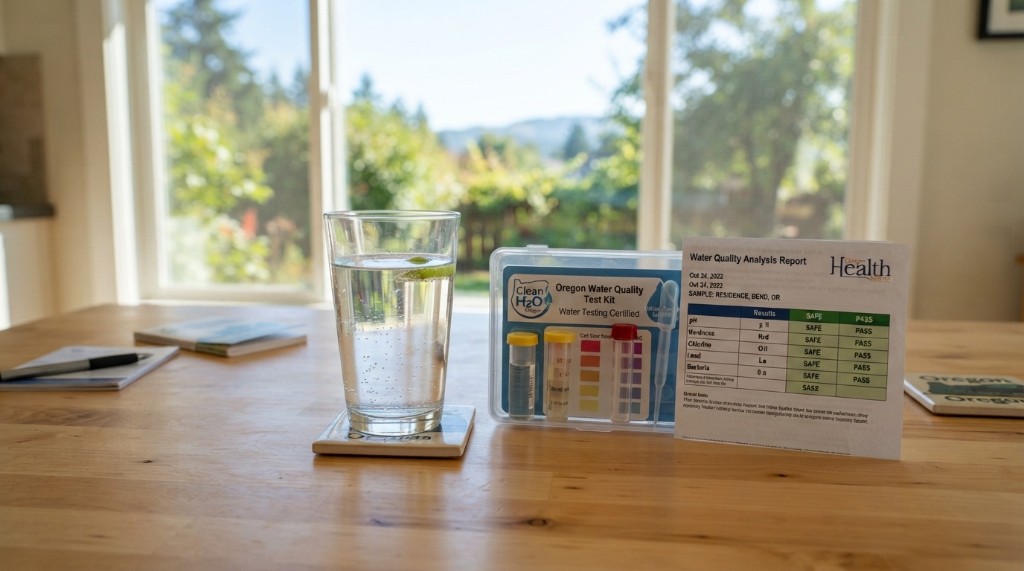
When park managers dismiss complaints claiming “the water passed state tests,” independent laboratory verification is your strongest asset. Certified chain-of-custody results defeat landlord hearsay in court.
Typical lab fee: about $200 for a three-point sample package (varies by lab).
The 3-point sample strategy (proving landlord liability)
Samples at three discrete points isolate where contamination enters and whether the issue is in the park’s main delivery pipes or your home’s interior plumbing:
A. Main supply riser (park entry)
Drawn from the park utility connection outside before water enters your home’s skirting. Contamination here is the park owner’s responsibility.
B. Kitchen drinking tap
Cold-water first-draw from your primary food-preparation fixture — shows daily human exposure risk.
C. Secondary tap (bathroom/tub)
Confirms chemical or bacterial persistence throughout the structure and helps disprove “one dirty aerator” claims.
Recommended test panels
Ask for an Oregon well package that includes: total coliform & E. coli, lead & copper, arsenic, nitrates/nitrites, and iron & turbidity.
Certified environmental labs in Oregon
Order a sterile collection kit from an Oregon Environmental Laboratory Accreditation Program (ORELAP) certified facility — for example Alexin Analytical Laboratories (Tigard/Salem) or Neilson Research Corporation (Southern Oregon).