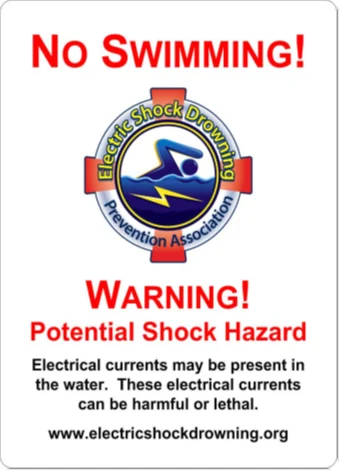
Living in marinas during hot summer weather is a delight and the enticement of jumping into the water may be irresistible. However, it also comes with the potential for danger in ways homeowners are not always aware – specifically electrical shock. The electricity problem normally originates from the marina infrastructure or boats, not from the home itself, but the results are no less concerning. Although this is a rare occurrence, it has happened in Oregon marinas and should be considered as part of any owners safety rules for family and guests. Signs, like the one below are available for purchase from the ESD Organization.
Electric Shock Drowning (ESD) is a hidden, fatal water hazard that occurs when a low level of alternating current (AC) leaks into the water, passes through a swimmer’s body, and causes skeletal muscle paralysis, rendering them unable to swim or stay afloat. It is often called a “silent killer” because the water looks perfectly safe, and autopsies rarely show physical signs of electrical injury, leading many incidents to be misclassified as standard drownings.
The Source: Faulty electrical wiring, improperly grounded wires, or unmaintained equipment on boats, docks, and marinas leak AC voltage directly into the surrounding water.
The Trigger: High-voltage currents are often intermittent. The water may become instantly energized only when a specific device cycles on, like a boat’s air conditioner, water heater, battery charger, or dock lighting.
Symptoms of In-Water Electrocution
- Feeling a sudden tingling sensation.
- Experiencing unexplained muscle cramps or numbness.
- Panic, paired with an inability to move the limbs.
Survival Strategy: If You Feel a Shock
If you are swimming and suspect the water is energized, follow the phrase championed by the Electric Shock Drowning Prevention Association (ESDPA): “If you feel a shock, swim away from the dock.